Muhammad Ikram Let's talk

Vague Requests Cost More Than Slow Launches

"Add discount codes" is a wish, not a requirement.

A developer can build from it only when it also says:
1. Who it is for and what problem it solves.
2. What "done" looks like.
3. What happens when the code has expired.
4. What is out of scope for now.
5. Who answers questions when they get stuck.

Miss one and the developer guesses. Every guess is a small bet on rework.

Which of the five do your specs skip most often?
01 / 01Requirements

If developers have to guess, it isn't a requirement

Vague: "Add discount codes."

PartBuildable version
User + problemReturning buyers have no code field
DoneTotal updates before payment
Edge caseExpired code says why
Out of scopeStacking two codes
OwnerOne named product lead

More insights

Keep reading

All posts
Carousel

Startups & Product 1 min read

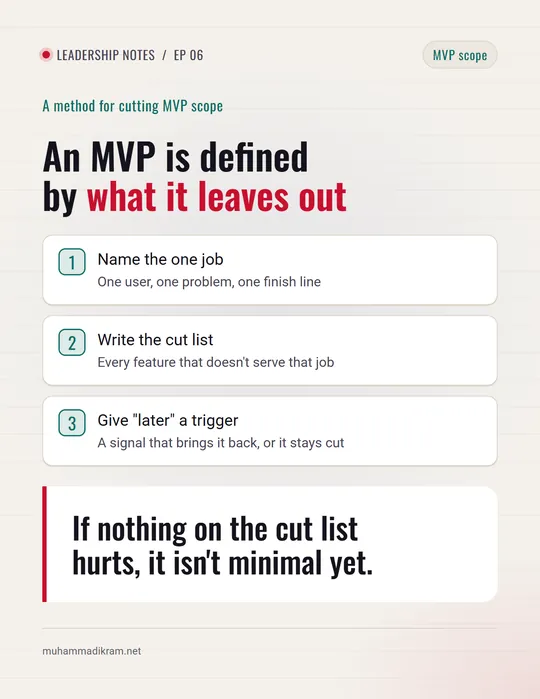
The Fastest Growth Test Is the Feature You Cut

A common trap: the MVP ships with ten features, conversion moves, and nobody can say which one did it. Name the one job, write the cut list, give every "later" a trigger. A smaller launch gives a cleaner signal and a faster next test.

Carousel

Startups & Product 1 min read

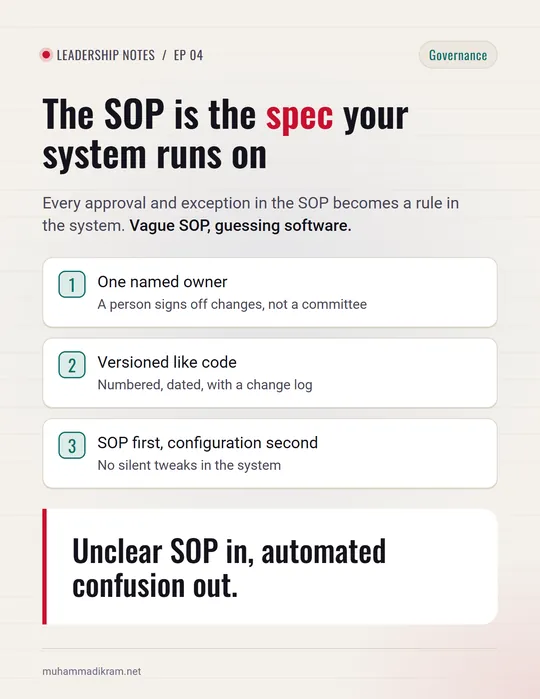
The SOP Is the Spec Your Growth Stack Runs On

A common trap: buying a new CRM to fix a messy lead process. The system then routes the mess faster. Write the SOP first, give it one owner, version every change, and only then configure the funnel. Clean process, cleaner data.

Carousel

Startups & Product 1 min read

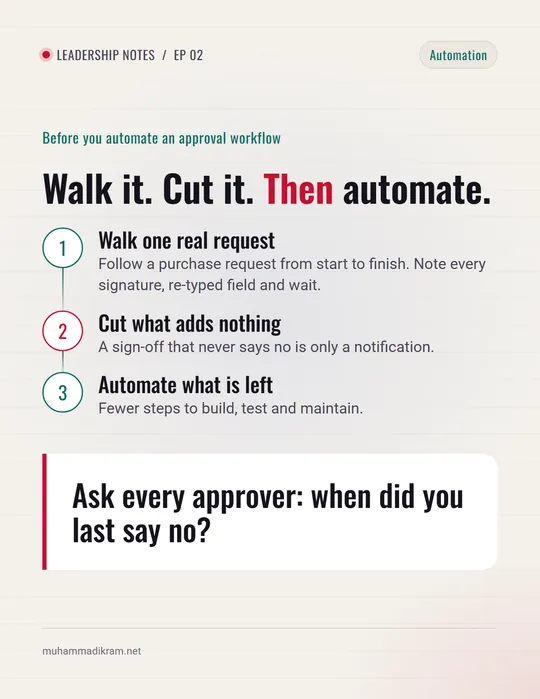
Automating a Broken Process Just Breaks It Faster

A common trap: a slow approval gets automated, and it is still slow. Every sign-off just moved into the tool. Walk one real request first, cut the steps that never say no, then automate. Every step removed is one less place for work to stall.