Technology explained without the jargon. How storage was rebuilt six times in fifty years, why one IBM paper ended a decade of duplicate spreadsheets, and what the newest AI models actually change for a business.
Written for people who make decisions about technology but don't want a lecture to make them.
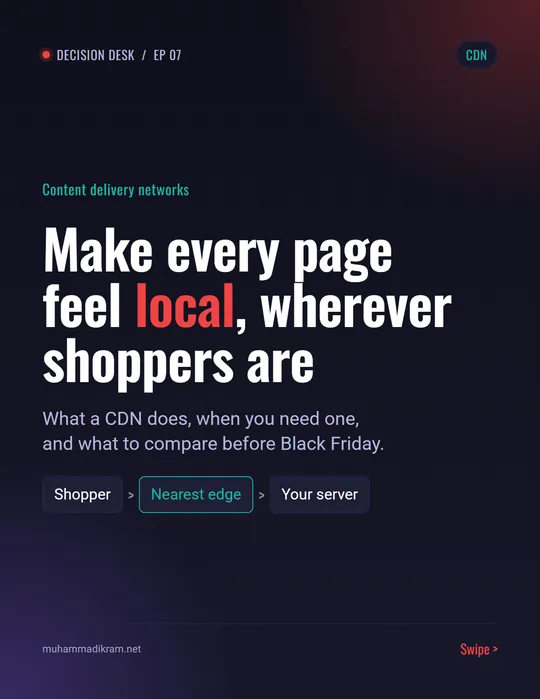
A common trap: ad budgets rise for Black Friday while pages still load from one distant server. A Deloitte study for Google tied 0.1s of mobile speed to 8.4% more retail conversions. The lesson: fix delivery before buying more traffic.
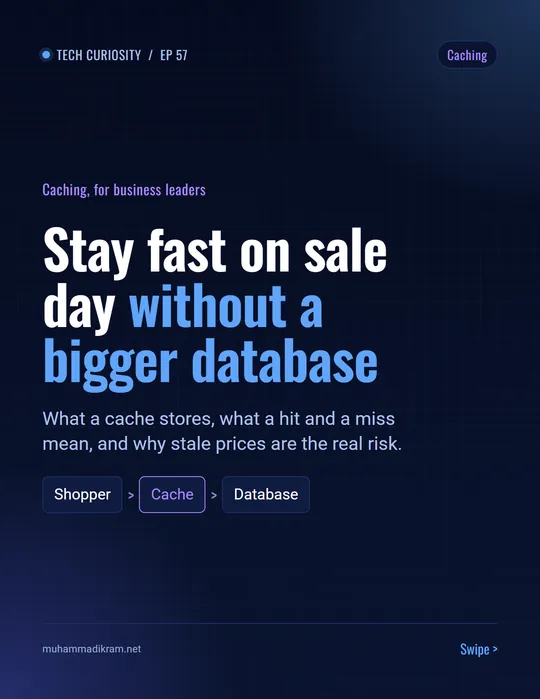
A common trap: a sale campaign works, traffic spikes, and every visit hits the database. Pages lag and carts stall. A cache serves popular pages from memory. The lesson: protect conversion at peak, and clear cached prices the moment they change.
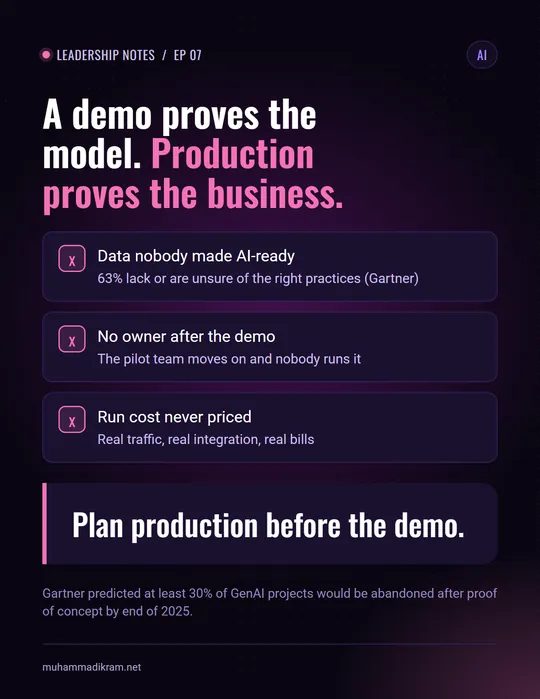
A common trap: the AI demo wins the room, then stalls. Gartner predicted at least 30% of GenAI projects would be dropped after proof of concept. The growth lesson: budget the data, owner, integration and run cost before the demo.
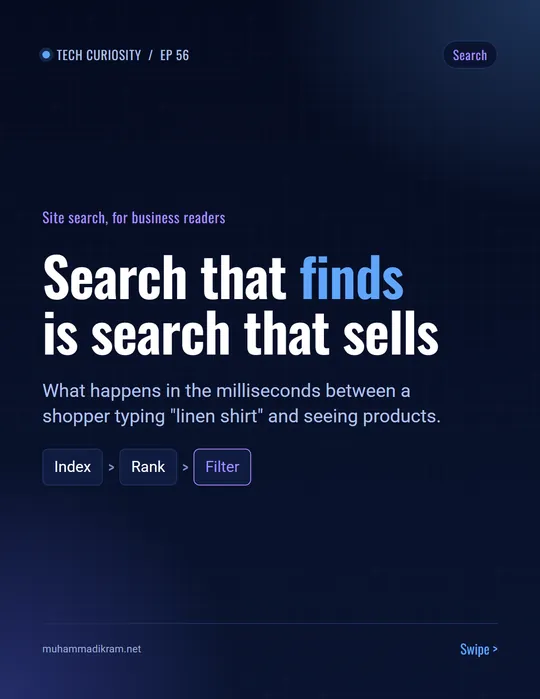
A shopper who types a query already knows what they want. Zero results, a missed typo or a slow page sends that intent elsewhere. Deloitte linked a 0.1s faster mobile site to 8.4% more retail conversions. Audit the search log first.
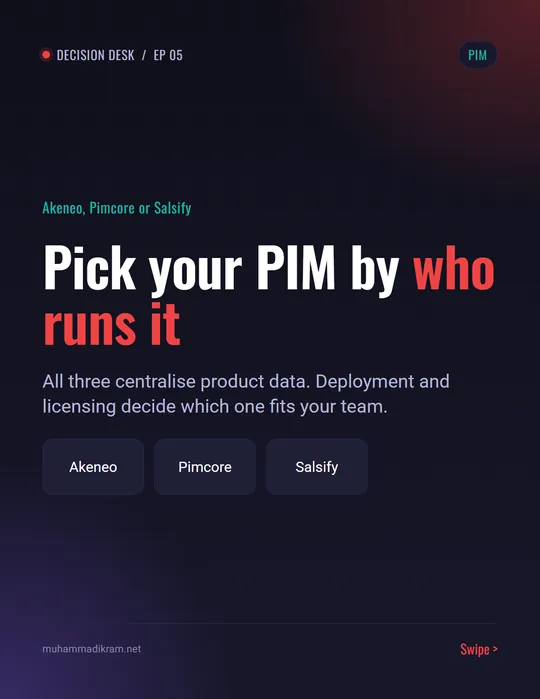
A common trap: picking a PIM from the slickest demo. The costlier question is who runs it. Self-hosting means the team owns upgrades; SaaS means the vendor roadmap does. Get that wrong and every channel launch slows down.
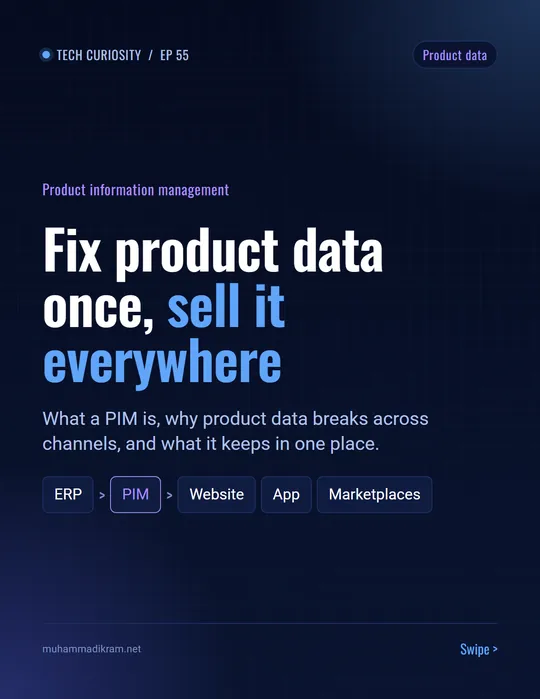
54% of shoppers have abandoned a sale over inconsistent product info across websites (Salsify, 2025). Better ads cannot fix that. One master product record, enriched once and published to every channel, lifts the whole funnel.
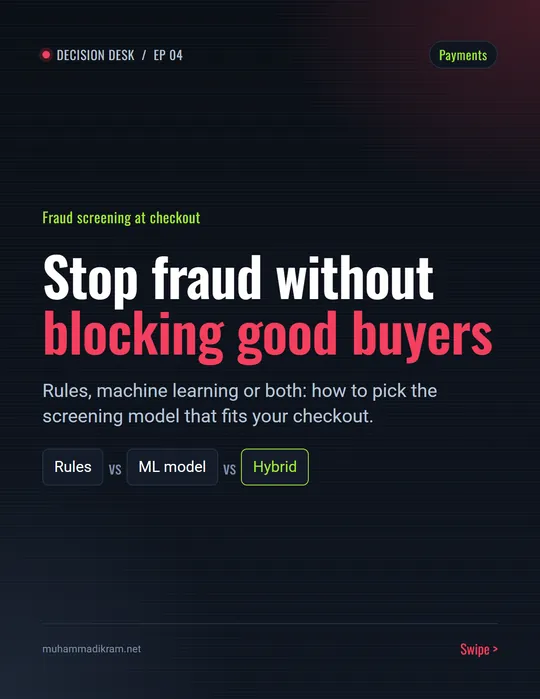
The MRC 2025 survey puts the average order rejection rate at 5.0%. Each false decline is a buyer already paid for, lost at the last funnel step. Let a model score, let readable rules decide, and track approvals like conversion.
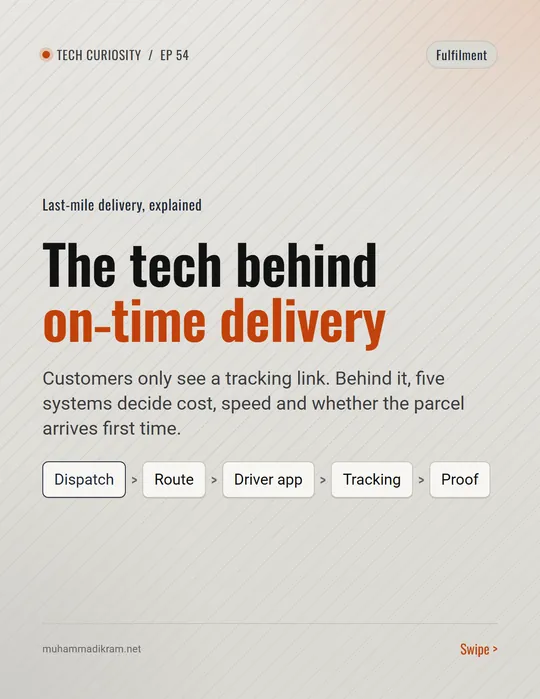
Capgemini research puts 41% of supply chain cost in the last mile, yet most funnels stop tracking at the order. A missed first delivery is a conversion leak too. Treat first-attempt success as a growth metric, not an ops footnote.
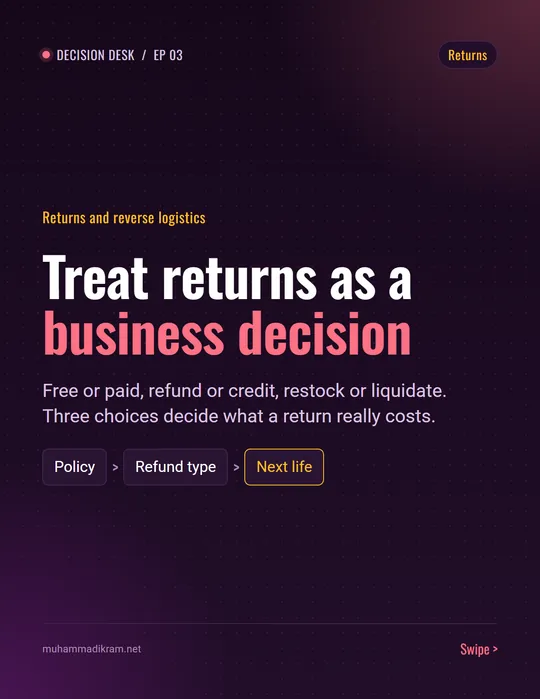
Return fees look like margin protection. Yet 57% of shoppers have dropped a retailer after being charged for a return. Offering an exchange first keeps revenue inside the funnel and turns a return into a second conversion.
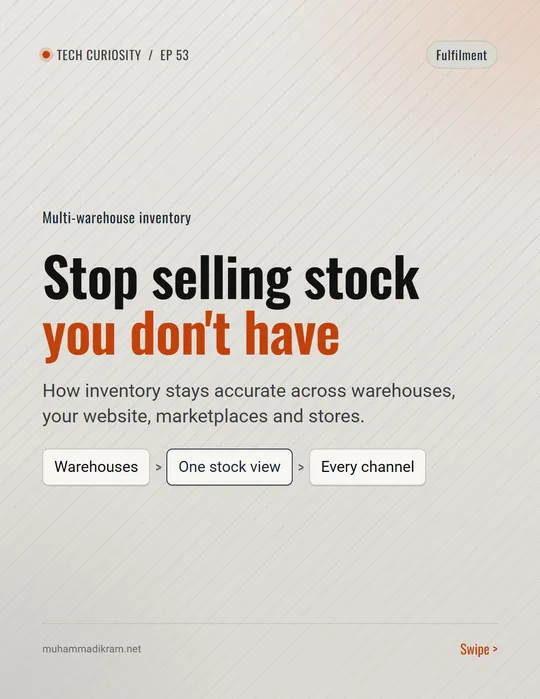
A shopper pays, then gets an "out of stock" email. That lost order was paid for twice: once in ads, once in trust. Selling from available-to-promise, not the shelf count, protects conversion across every channel.
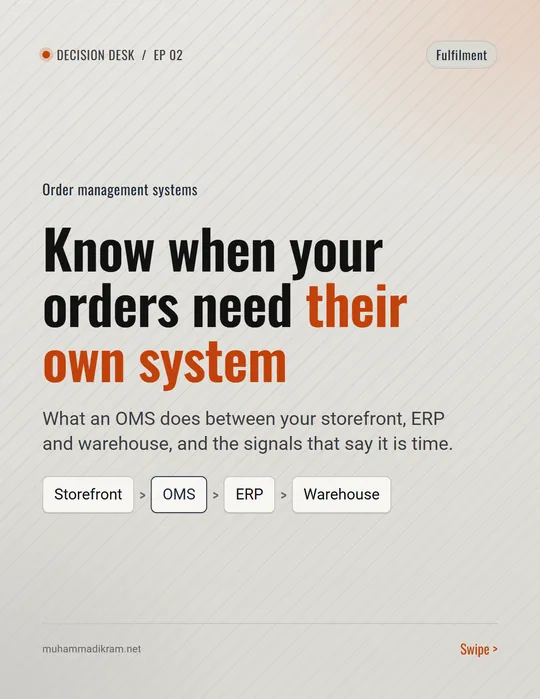
A common trap: a new marketplace goes live, orders jump, and staff start copying them between screens. Stock sells twice and refunds follow. The lesson: before adding a channel, decide which system routes the orders. Growth needs a middle layer.
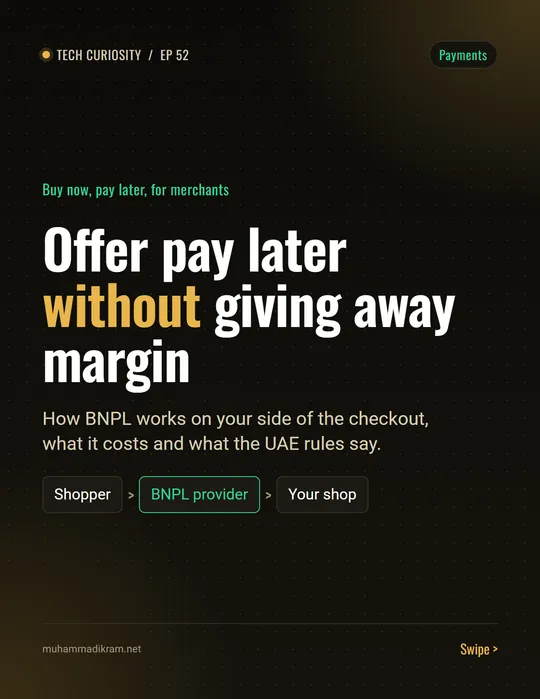
BNPL looks like a conversion win until the fee lands on every order. The CFPB put the average American merchant rate at 3.08% in 2021. The lesson: measure incremental baskets, not total BNPL sales. Lift only counts if it would not happen anyway.
Read more ↗
behind the posts
Every carousel starts as code
Slides here are designed in HTML and CSS first, then rendered for LinkedIn. Same tokens, same type scale, every week.

 Carousel