One Booking Habit Turned A Cleaning Marketplace Into A Category Leader
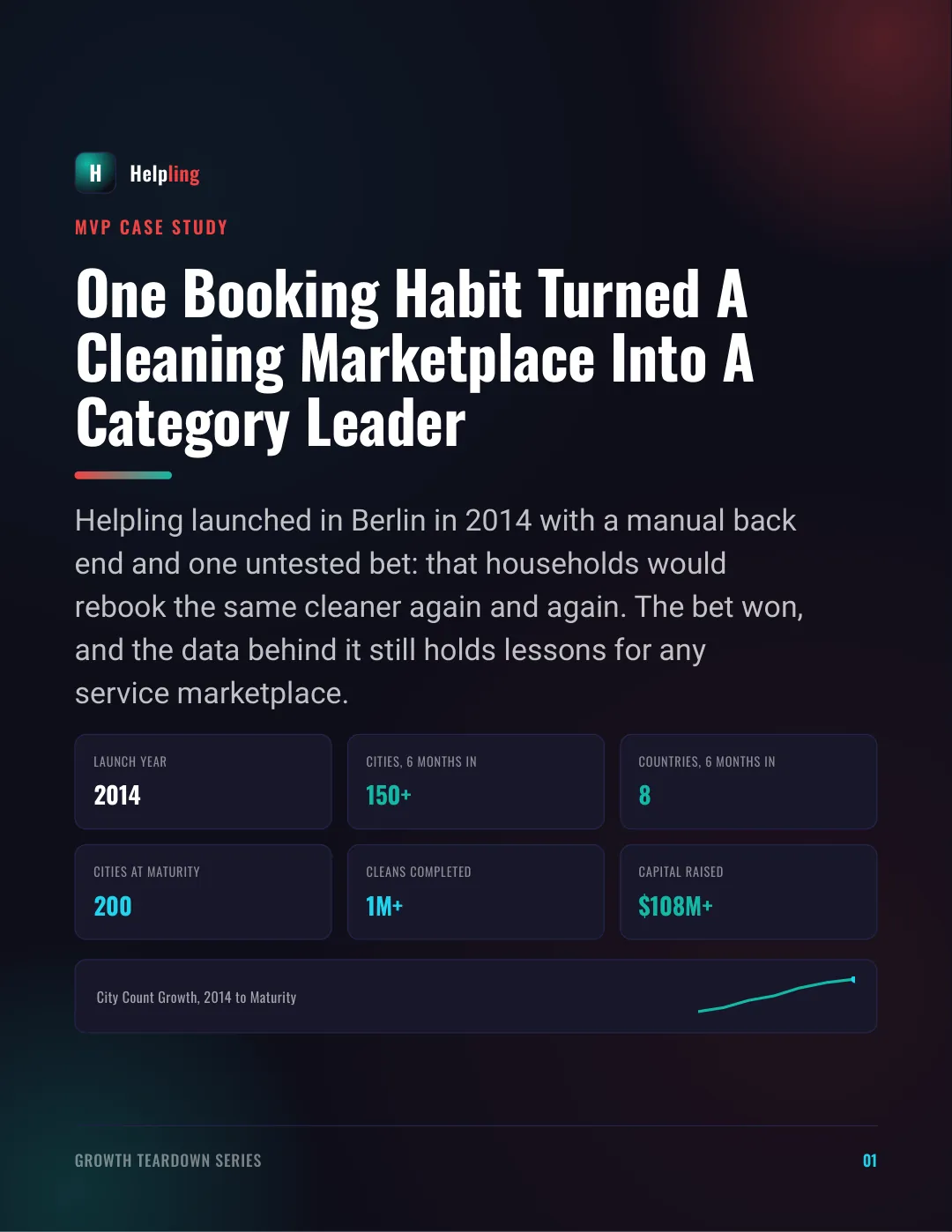
A cleaning marketplace launched in one city with a manual back end and a single untested bet: households would rebook the same cleaner. That habit became the entire growth engine. A scrappy MVP scaled to 200 cities and over $100M in funding, proving retention mattered more than acquisition.
Read the slides as text
Slide 1
H
Helpling
MVP CASE STUDY
One Booking Habit Turned A
Cleaning Marketplace Into A
Category Leader
Helpling launched in Berlin in 2014 with a manual back
end and one untested bet: that households would
rebook the same cleaner again and again. The bet won,
and the data behind it still holds lessons for any
service marketplace.
LAUNCH YEAR
2014
CITIES, 6 MONTHS IN
150+
COUNTRIES, 6 MONTHS IN
8
CITIES AT MATURITY
200
CLEANS COMPLETED
1M+
CAPITAL RAISED
$108M+
City Count Growth, 2014 to Maturity
GROWTH TEARDOWN SERIES
01
Slide 2
H
Helpling
THE STARTING POINT
Berlin, March 2014. A Website And A Bet
On Habit.
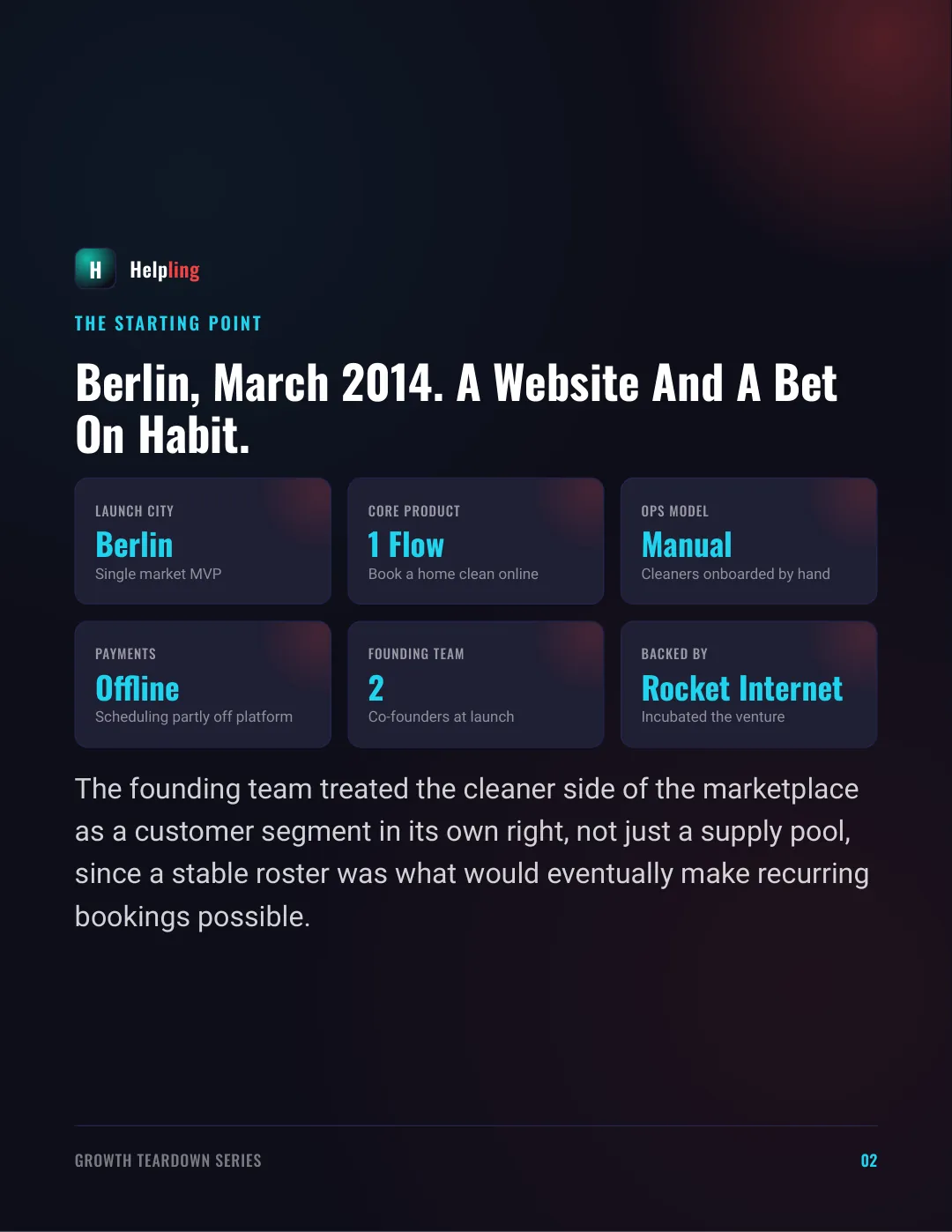
The founding team treated the cleaner side of the marketplace
as a customer segment in its own right, not just a supply pool,
since a stable roster was what would eventually make recurring
bookings possible.
LAUNCH CITY
Berlin
Single market MVP
CORE PRODUCT
1 Flow
Book a home clean online
OPS MODEL
Manual
Cleaners onboarded by hand
PAYMENTS
Offline
Scheduling partly off platform
FOUNDING TEAM
2
Co-founders at launch
BACKED BY
Rocket Internet
Incubated the venture
GROWTH TEARDOWN SERIES
02
Slide 3
H
Helpling
BEHIND THE INTERFACE
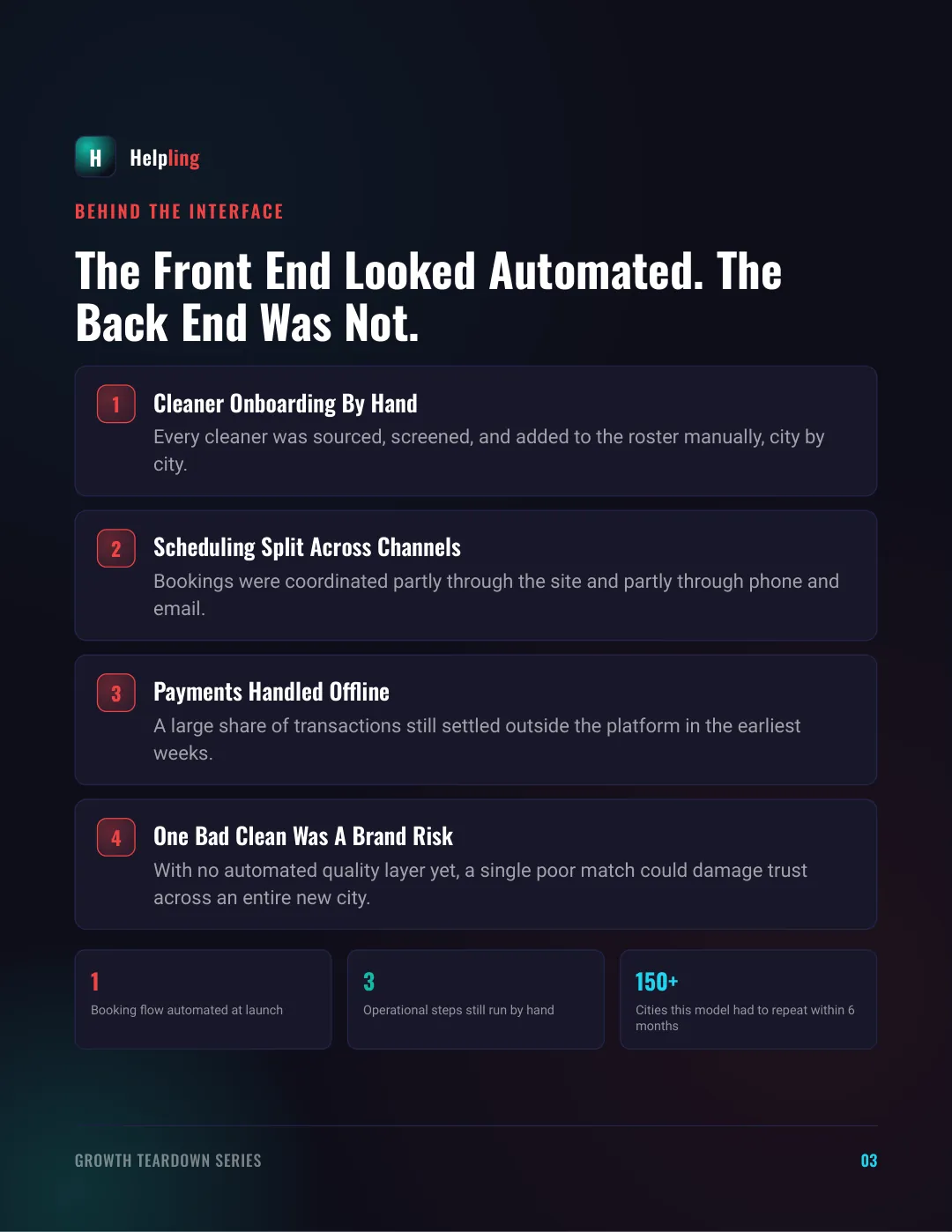
The Front End Looked Automated. The
Back End Was Not.
1
Cleaner Onboarding By Hand
Every cleaner was sourced, screened, and added to the roster manually, city by
city.
2
Scheduling Split Across Channels
Bookings were coordinated partly through the site and partly through phone and
email.
3
Payments Handled Offline
A large share of transactions still settled outside the platform in the earliest
weeks.
4
One Bad Clean Was A Brand Risk
With no automated quality layer yet, a single poor match could damage trust
across an entire new city.
1
Booking flow automated at launch
3
Operational steps still run by hand
150+
Cities this model had to repeat within 6
months
GROWTH TEARDOWN SERIES
03
Slide 4
H
Helpling
THE SIGNAL WAS REAL
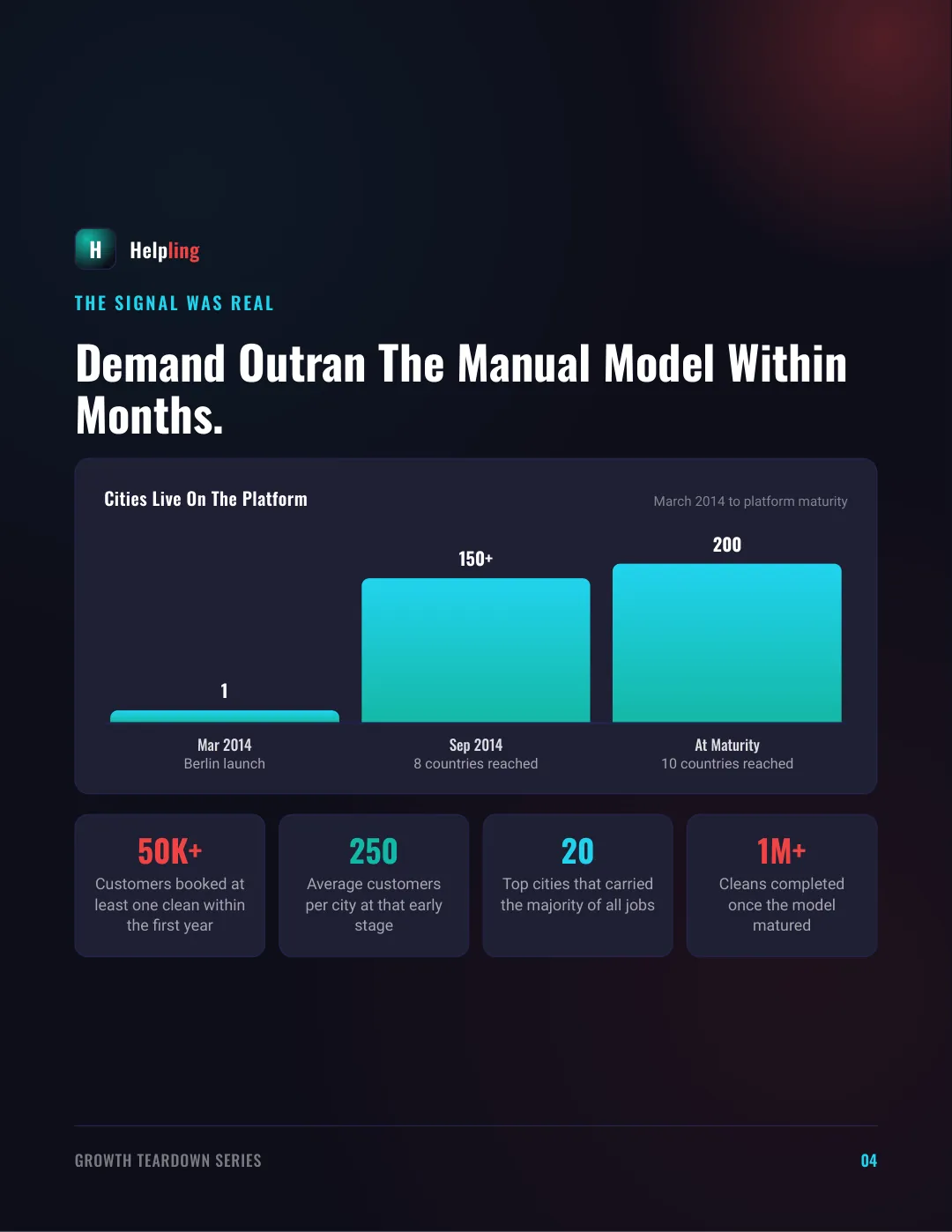
Demand Outran The Manual Model Within
Months.
Cities Live On The Platform
March 2014 to platform maturity
1
150+
200
Mar 2014
Berlin launch
Sep 2014
8 countries reached
At Maturity
10 countries reached
50K+
Customers booked at
least one clean within
the first year
250
Average customers
per city at that early
stage
20
Top cities that carried
the majority of all jobs
1M+
Cleans completed
once the model
matured
GROWTH TEARDOWN SERIES
04
Slide 5
H
Helpling
A SECOND LEARNING
The Manual Step That Turned Out Not To
Matter.
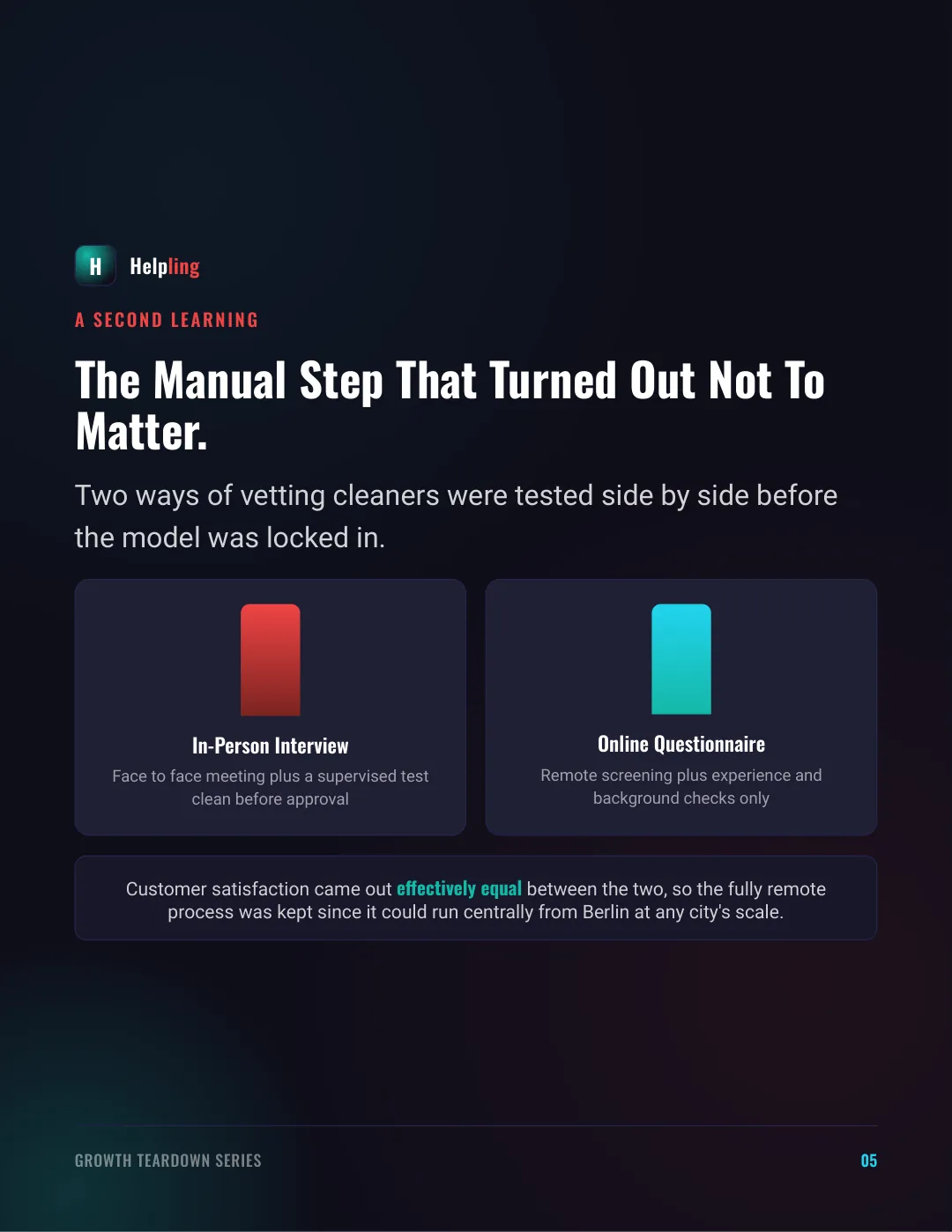
Two ways of vetting cleaners were tested side by side before
the model was locked in.
In-Person Interview
Face to face meeting plus a supervised test
clean before approval
Online Questionnaire
Remote screening plus experience and
background checks only
Customer satisfaction came out effectively equal between the two, so the fully remote
process was kept since it could run centrally from Berlin at any city's scale.
GROWTH TEARDOWN SERIES
05
Slide 6
H
Helpling
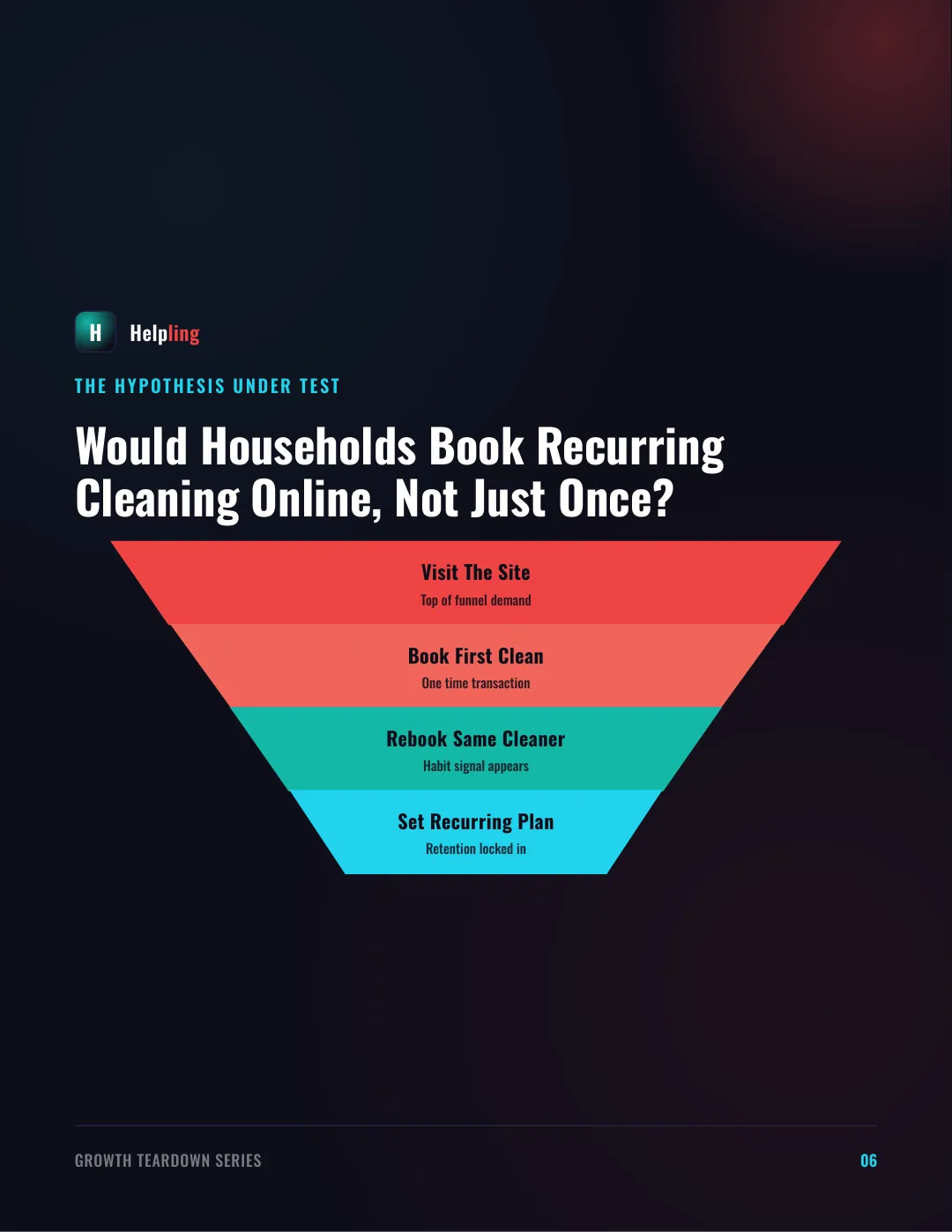
THE HYPOTHESIS UNDER TEST
Would Households Book Recurring
Cleaning Online, Not Just Once?
Visit The Site
Top of funnel demand
Book First Clean
One time transaction
Rebook Same Cleaner
Habit signal appears
Set Recurring Plan
Retention locked in
GROWTH TEARDOWN SERIES
06
Slide 7
H
Helpling
A THIRD LEARNING
Quality Control Was Delegated To The
Customer.
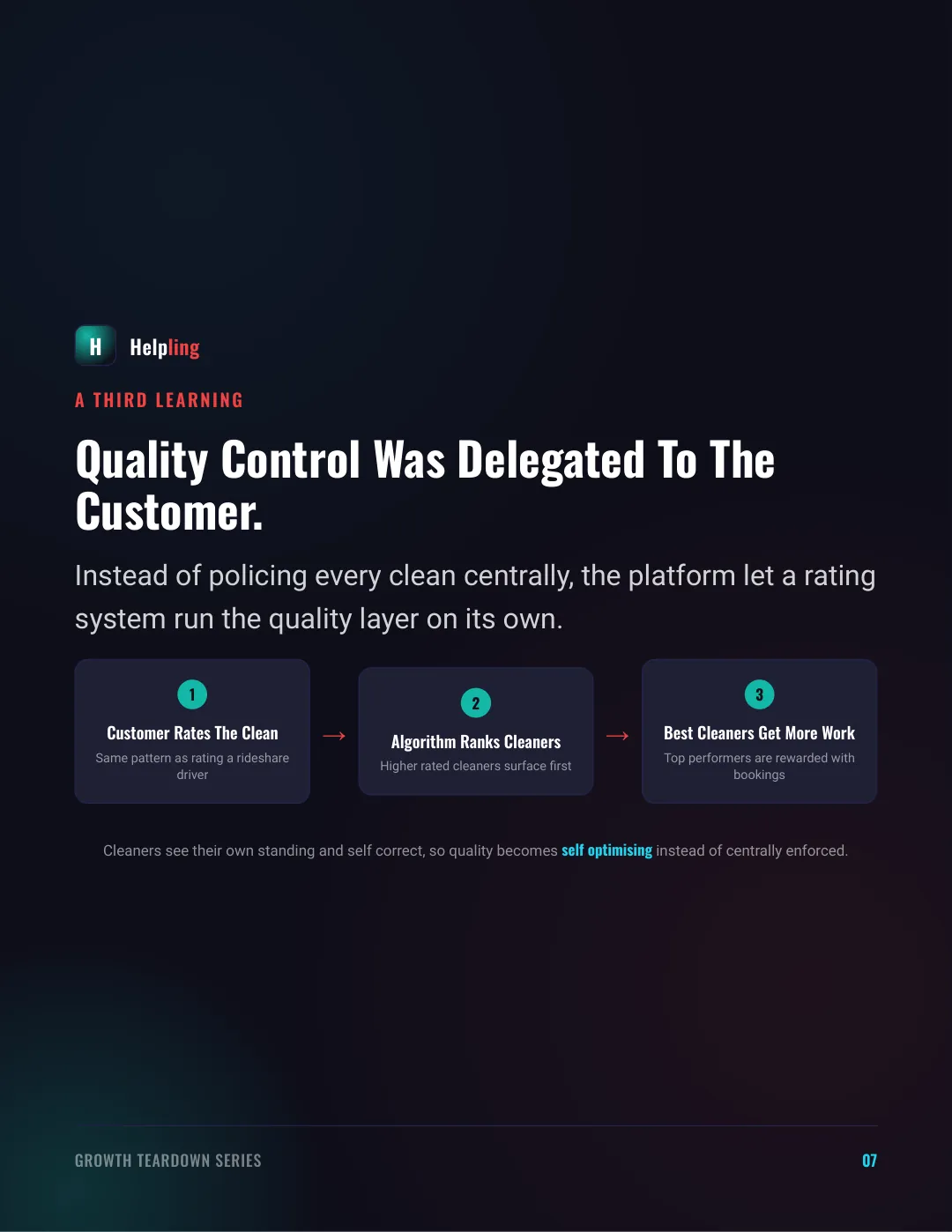
Instead of policing every clean centrally, the platform let a rating
system run the quality layer on its own.
1
Customer Rates The Clean
Same pattern as rating a rideshare
driver
→
2
Algorithm Ranks Cleaners
Higher rated cleaners surface first
→
3
Best Cleaners Get More Work
Top performers are rewarded with
bookings
Cleaners see their own standing and self correct, so quality becomes self optimising instead of centrally enforced.
GROWTH TEARDOWN SERIES
07
Slide 8
H
Helpling
CAPITAL FOLLOWED THE SIGNAL
Investors Funded The Habit, Not Just The
Website.
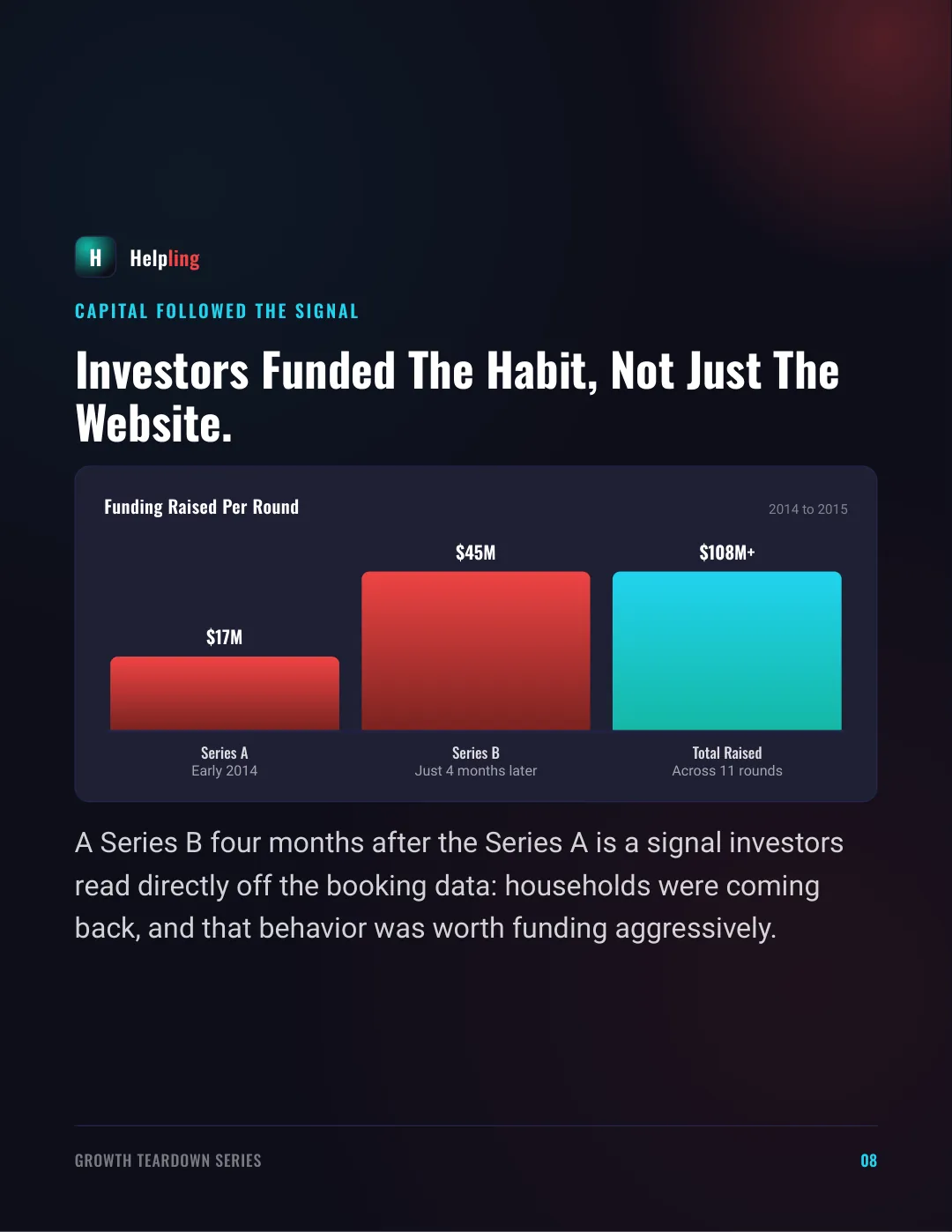
Funding Raised Per Round
2014 to 2015
$17M
$45M
$108M+
Series A
Early 2014
Series B
Just 4 months later
Total Raised
Across 11 rounds
A Series B four months after the Series A is a signal investors
read directly off the booking data: households were coming
back, and that behavior was worth funding aggressively.
GROWTH TEARDOWN SERIES
08
Slide 9
H
Helpling
WHERE THE MARGIN LIVED
A Marketplace That Only Turned Profitable
At Repeat Scale.
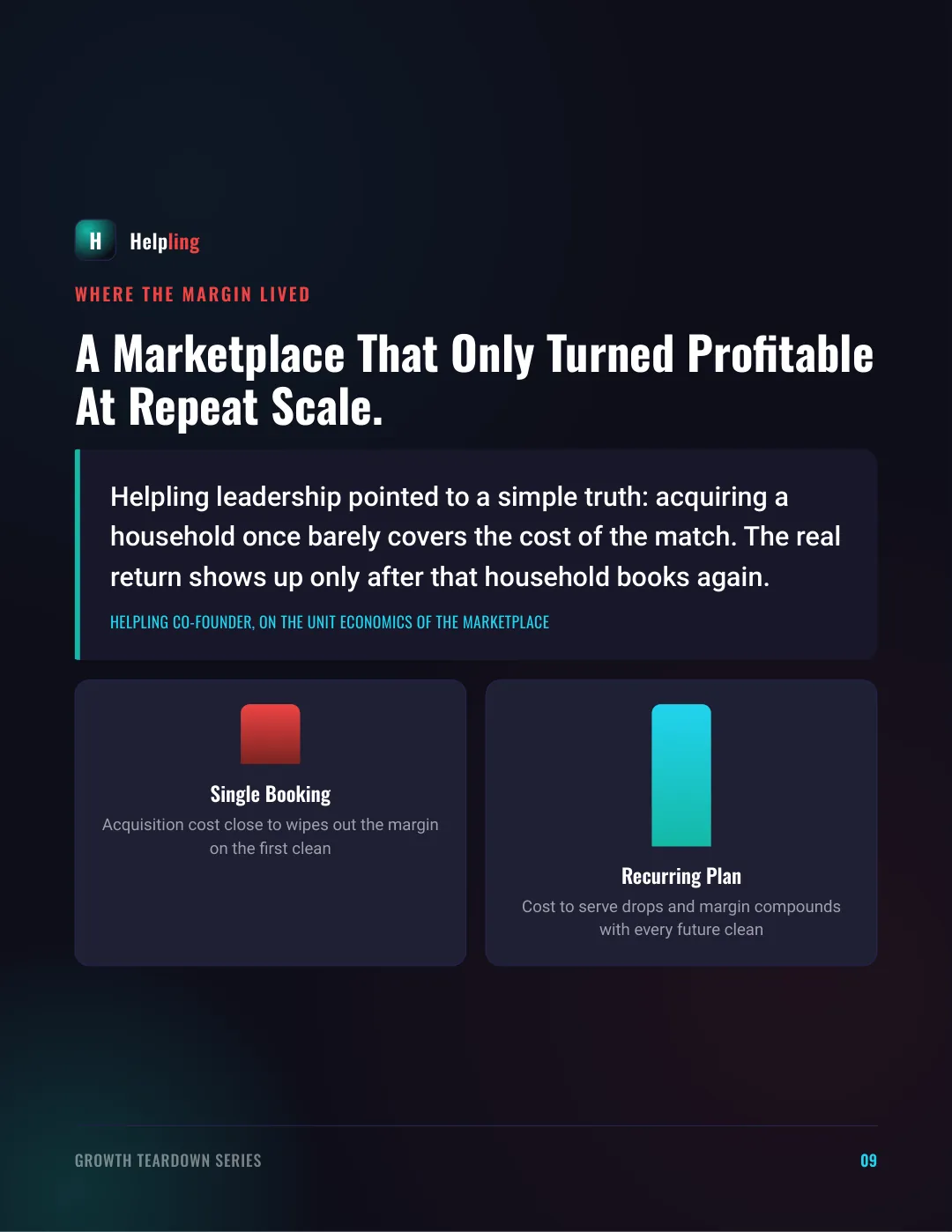
Helpling leadership pointed to a simple truth: acquiring a
household once barely covers the cost of the match. The real
return shows up only after that household books again.
HELPLING CO-FOUNDER, ON THE UNIT ECONOMICS OF THE MARKETPLACE
Single Booking
Acquisition cost close to wipes out the margin
on the first clean
Recurring Plan
Cost to serve drops and margin compounds
with every future clean
GROWTH TEARDOWN SERIES
09
Slide 10
H
Helpling
CORE LEARNING
Recurring Bookings Drive Retention, And
Retention Drives Everything Else.
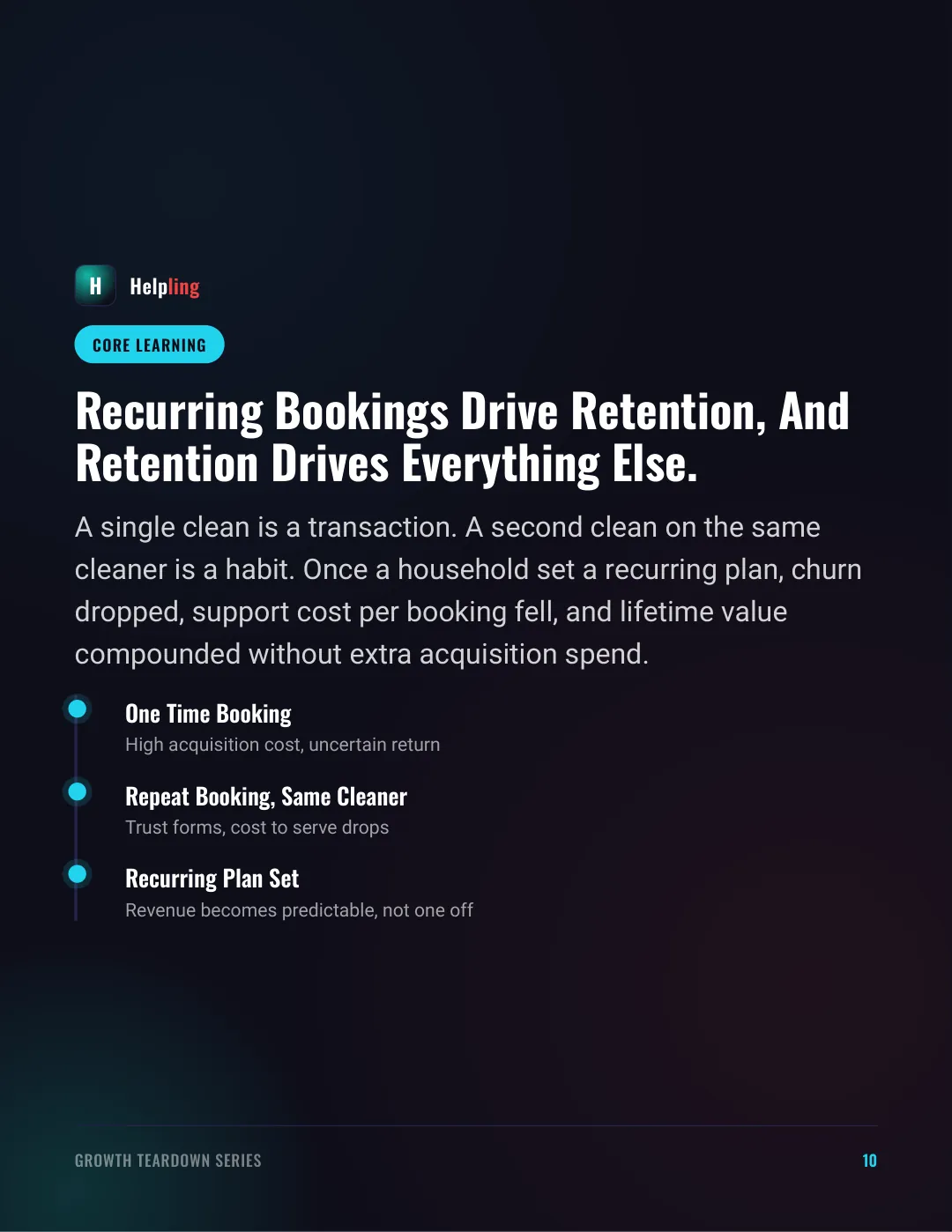
A single clean is a transaction. A second clean on the same
cleaner is a habit. Once a household set a recurring plan, churn
dropped, support cost per booking fell, and lifetime value
compounded without extra acquisition spend.
One Time Booking
High acquisition cost, uncertain return
Repeat Booking, Same Cleaner
Trust forms, cost to serve drops
Recurring Plan Set
Revenue becomes predictable, not one off
GROWTH TEARDOWN SERIES
10
Slide 11
H
Helpling
THE TAKEAWAY
Manual Operations Can Ship An MVP. Only
Habit Can Scale It.
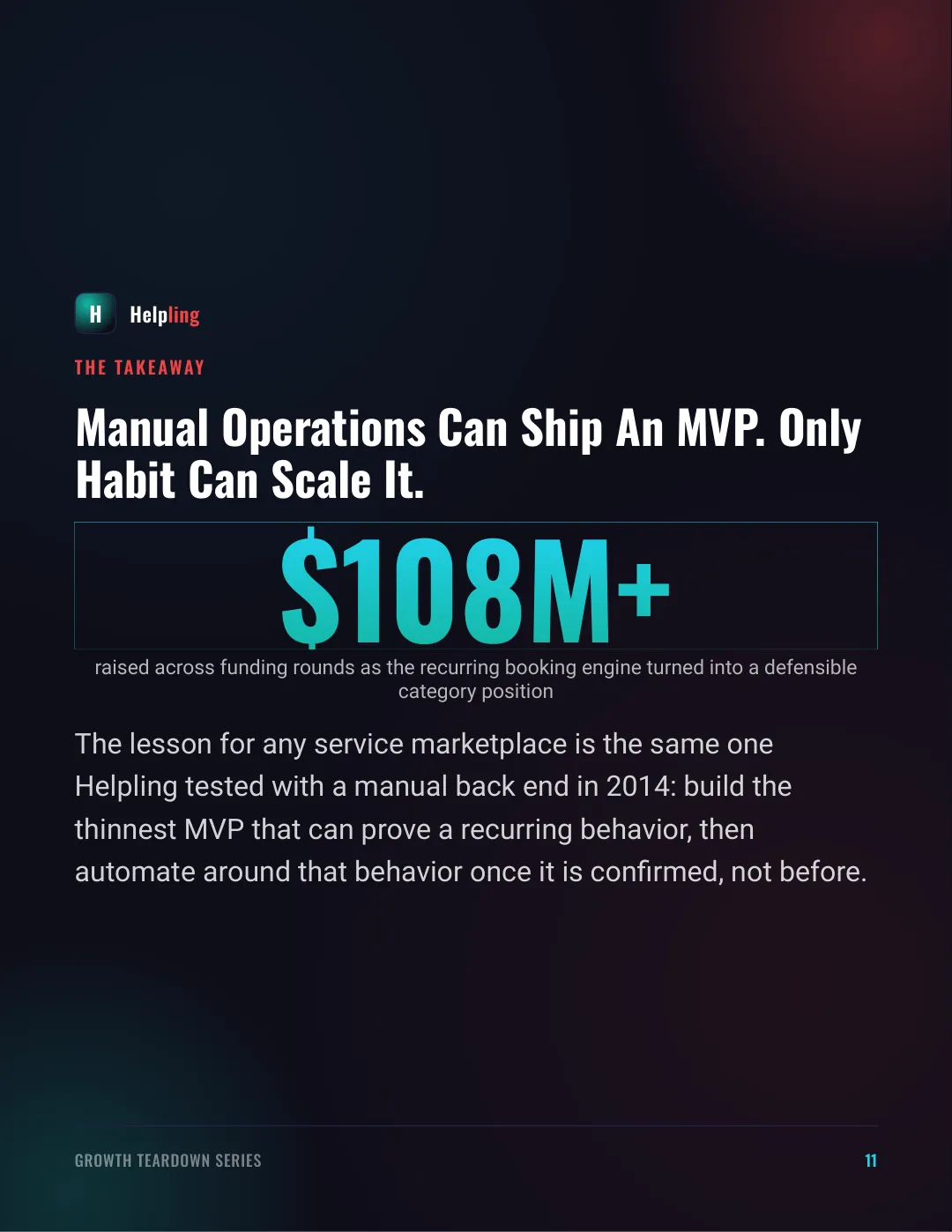
$108M+
$108M+
raised across funding rounds as the recurring booking engine turned into a defensible
category position
The lesson for any service marketplace is the same one
Helpling tested with a manual back end in 2014: build the
thinnest MVP that can prove a recurring behavior, then
automate around that behavior once it is confirmed, not before.
GROWTH TEARDOWN SERIES
11